

Martyn's Law Lockdown System: UK Installer Guide


Martyn's Law makes a lockdown and communication plan a legal expectation for hundreds of thousands of UK venues from around April 2027 — and a single, well-designed lockdown system is the cleanest way for installers to deliver it. This hub is the UK installer's reference for turning the Terrorism (Protection of Premises) Act 2025 into a concrete, in-stock bill of materials: how the tiers work, what the four-layer Trigger → Alert → Response → Record architecture looks like, and exactly which Netgenium, Hikvision, Ajax, Pyronix and CQR products do each job. Everything linked here is held in stock at Netview in Leicester for same-day UK dispatch.

At a glance
- What it is: Martyn's Law is the common name for the Terrorism (Protection of Premises) Act 2025, which received Royal Assent on 3 April 2025.
- When it bites: a transition period of at least 24 months applies, so duties are expected to become enforceable from around April 2027. The Security Industry Authority (SIA) is the regulator.
- Standard tier (200–799): a terrorism evaluation plus proportionate public-protection procedures — evacuation, invacuation, lockdown and communication.
- Enhanced tier (800+): the Standard duties plus public-protection measures such as monitoring, CCTV and controlled access.
- Education: early years, primary, secondary and further-education settings are always Standard tier, even at 800+ capacity.
- The practical answer: a four-layer lockdown system — Trigger, Alert, Response, Record — built on one PoE network, with audio (Netgenium IP speakers) and visual (Netgenium IP LED displays) alerting at its core.
- Buy it as one BoM: Netview cross-stocks the Netgenium, Hikvision, Ajax, Pyronix and CQR kit on this page — one PO, one delivery, trade desk on 01163 800 838.
Published 1 June 2026 · Author: Netview · UK installer reference, updated for the 2025 Act and 2026 guidance position.
What Martyn's Law actually requires
Martyn's Law requires those responsible for qualifying public premises and events to plan for, and reduce the harm from, an act of terrorism. It is named after Martyn Hett, one of 22 people killed in the 2017 Manchester Arena attack, and reached the statute book as the Terrorism (Protection of Premises) Act 2025 on 3 April 2025 (Home Office factsheet, April 2025). The duties are not yet in force: the Government has built in a transition period of at least 24 months so that responsible persons can prepare, with enforcement widely expected from around April 2027 (ProtectUK overview).
The Act is deliberately outcome-focused rather than prescriptive about specific products. It does not mandate a particular speaker, camera or panic button. What it does require is that a venue can warn the people inside it quickly and give them clear, specific instructions — lock down here, move into the hall there, evacuate that way. That is precisely the job a purpose-built lockdown system does, and it is why installers are being asked to quote for one. The SIA will oversee compliance by requesting information, reviewing plans and procedures, and inspecting where appropriate.
Standard tier (200–799 capacity): procedures, not just paperwork
Standard tier covers premises where 200 to 799 people may be present at the same time, and the duty is to have proportionate public-protection procedures in place. According to the ProtectUK overview, those procedures fall under four headings: evacuation (getting people out), invacuation (bringing people into a safer part of the building), lockdown (securing the site to restrict a threat's movement) and communication (alerting and instructing people quickly).
There is no requirement at Standard tier to install specific physical infrastructure — but in practice, a procedure is only as good as your ability to deliver it under pressure. A lockdown instruction that depends on a member of staff running down a corridor shouting is not a credible procedure for a 600-capacity venue. A networked voice-alert and visual-messaging system is the practical, defensible way to make evacuation, invacuation, lockdown and communication real, repeatable and quick. That is the gap installers fill.
Enhanced tier (800+ capacity): measures on top of procedures
Enhanced tier applies where 800 or more people may be present, and adds public-protection measures to the Standard-tier procedures. These measures are about reducing both the likelihood and the impact of an attack, and the categories named in guidance include monitoring of the premises and their vicinity, movement of people into and out of the premises, physical safety and security of the premises, and the security of information that could assist an attacker (ProtectUK).
For an installer, that translates directly into CCTV with active deterrence, controlled access, intercom-based door control and a recorded audit trail — on top of the alerting backbone every venue needs. Enhanced-tier sites also face materially higher penalties for getting it wrong, which sharpens the commercial case for doing it properly the first time.
Education settings: the special case every installer should know
Schools and colleges are always treated as Standard tier under Martyn's Law, regardless of how many people are on site. Government guidance confirms that early years, primary, secondary and further-education settings sit in the Standard tier even where 800 or more individuals are present, and that Enhanced-tier duties will not apply to those premises (GOV.UK: how Martyn's Law will affect education settings).
That is good news for school budgets — but it does not remove the operative requirement. The lockdown, evacuation, invacuation and communication plan is the document a school is judged against, and many schools already run lockdown drills. A networked PA-plus-visual system that can push "LOCKDOWN — STAY IN YOUR ROOM" to every classroom and a different message to the playground is exactly what makes that plan deliverable. Because education is capped at Standard tier, the spec is also refreshingly affordable: an audio-and-visual alerting layer, a handful of trigger points and a modest camera and recording layer.

The four-layer Complete Lockdown system
A complete lockdown system has four layers: Trigger, Alert, Response and Record. Someone or something triggers the alarm; the system distributes a clear, zoned alert by audio and visual means; staff and responders act on a coordinated response; and everything is recorded so the venue can prove what happened and what it did. Built on a single PoE network, those four layers share cabling, switches and a management platform — which is what keeps the install tidy and the budget sane. The rest of this guide walks each layer and names the in-stock products that deliver it.
Layer 1 — Trigger devices: how the alarm gets raised
The trigger layer is the set of buttons, fobs and detectors that let a person raise a lockdown instantly and discreetly. The right mix depends on the site: fixed points at reception and tills, portable fobs for roaming staff, and lone-worker devices for vulnerable roles.
For hard-wired panic points, the Hikvision DS-K7P03 single-button and DS-K7P06 emergency exit/panic buttons are the workhorses at doors, reception desks and exit routes. Where the trigger needs to ride on a wireless AX PRO intruder system, the DS-PDEB2-EG2-WE fixed panic button and the portable DS-PDEBP2-EG2-WE give you desk-mounted and carried options, and the DS-PDB-IN-Wristband holder turns the portable button into a worn device for front-of-house staff.
On the wireless intruder side, the Ajax SpaceControl S key fob gives roaming staff a pocket trigger, while the Ajax Button (22963) with its holder (38215) mounts as a fixed or wearable panic point. For lone-worker and hold-up scenarios, the Pyronix HUD/MED-WE wearable and the CQR PADP2/SS/G1 dual-push hold-up button add deliberate, two-action triggers that resist accidental activation at tills and counters.
Layer 2 — Alert distribution: audio and visual on one network
The alert layer is what makes a lockdown plan deliverable: it pushes a clear, zoned message to everyone on site within seconds, in both sound and text. Netview builds this layer on Netgenium's IP PoE platform, which can run as a conventional IP public-address system day-to-day and switch to a lockdown alarm on a trigger (Netgenium Complete Lockdown Solution).
The audio half — Netgenium IP PoE speakers
Netgenium IP PoE speakers each take a single network cable for both power and audio, so there is no separate amplifier or 100 V line to design around. The ASP7201-IP is the 10 W flush ceiling speaker for classrooms, offices and corridors (Netgenium ASP7201-IP); the ASP7202-IP wall speaker and the ASP7204-IP column add wall-mount and higher-output options for halls and atria. For external coverage, the ASP7203-IP horn speaker runs at PoE 10 W or PoE+ 25 W and is rated to IP56 for yards, playgrounds and car parks (Netgenium ASP7203-IP). The range is rounded out by the cabinet ASP7205-IP, pendant ASP7206-IP, music horn ASP7207-IP and vandal-resistant ASP7208-IP.
Where a site already has a legacy 100 V-line PA or an analogue source, the ASP6202-POE and ASP6203-POE bridge analogue audio onto the IP platform, and the AUG3201-IP Audio Gateway takes analogue audio from an NVR or microphone and streams it across the LAN to a group of IP speakers (Netgenium AUG3201-IP). That makes retrofits into existing school and retail PA systems straightforward rather than a rip-and-replace.
The visual half — Netgenium IP PoE LED displays
Audio alone is not enough in noisy, crowded or hearing-impaired-accessible spaces, which is why the alert layer also drives visual messaging. Netgenium's IP PoE LED display range is being added to the Netview catalogue now and runs on the same PoE network and NGxControl management as the speakers: the AMD0301-IP LED Brick Light for compact entry points, the AMD0601-IP 6×1 single-row display for corridors and room markers, the AMD0901-IP 9×1 for halls and atria, and the AMD0902-IP 9×2 two-row display for main receptions and event venues, with pixel pitches down to P1.25 mm and indoor and IP-rated outdoor variants. Driven from NGxControl, each screen rotates the right message per zone automatically — "LOCKDOWN — STAY IN ROOM", "INVACUATION — MAIN HALL", or "EVACUATE" — and earns its keep in daily use with welcome messages, period bells, queue information and KPI displays.
Pre-order now: the Netgenium AMD-series IP PoE LED displays (AMD0301 / AMD0601 / AMD0901 / AMD0902-IP) are being added to stock. To reserve units or get the live messaging demo on the same PoE network as your speakers, call the Netview trade desk on 01163 800 838. Reference product pages: AMD0601-IP and AMD0902-IP.
Layer 3 — Response: see, deter and talk down
The response layer lets staff and responders see what is happening, deter a threat live, and control access — the difference between a passive alarm and an active intervention. Hikvision's LiveGuard cameras are the core here because they combine recording with active deterrence: a strobe and a two-way audio talk-down triggered automatically or by an operator.
For general coverage with active deterrence, the 4 MP DS-2CD2346G3-IZS2UY/SL motorised-varifocal turret and the dual-lens DS-2CD2346G3D-IZ2UY/SL cover entrances and approach routes, while the bullet-form DS-2CD2T46G2H-IS2U/SL (4 MP) and 8 MP DS-2CD2T86G2H-IS2U/SL handle longer perimeters. For wide entry zones where one camera should replace two, the 180° Panoramic ColorVu DS-2CD2387G2P-LSU/SL turret and DS-2CD2T87G2P-LSU/SL bullet give a single-channel panorama of a reception or forecourt.
Controlled access and two-way talk-down at the door come from the Hikvision TalkVu range: the DS-KV6114-WBE1 door station paired with the DS-KH8381-WTE1 indoor station lets reception lock a door and speak to whoever is outside it. And when a site needs an unmissable local sounder as well as the voice alert, the AX PRO DS-PS1-I-WE internal siren and DS-PS1-E-WE/BLUE external siren add audible-and-visible alarm at the boundary. For the camera side of the spec, our Hikvision ColorVu complete guide and Hikvision TalkVu installer guide go deeper on lens choice and intercom commissioning.
Layer 4 — Record: the audit trail is the compliance proof
The record layer captures the whole event so the venue can review its response and evidence its compliance. A recorded, time-stamped account of who triggered the alarm, what message went out and how staff responded is exactly the kind of evidence the SIA's risk-based oversight expects a responsible person to be able to produce.
For most Standard-tier and smaller Enhanced-tier sites, the AcuSense DS-7716NXI-K4(D) 16-channel and DS-7732NXI-K4(D) 32-channel NVRs give ample channels and false-alarm filtering. Larger or higher-retention sites step up to the AcuSeek DS-7732NXI-I4/16P/VPRO, whose natural-language search makes incident reconstruction far faster. Tie the footage together for review and handover with iVMS-4200 — our iVMS-4200 installer guide and Hikvision NVR buyer's guide 2026 cover the recorder and client side in full.
Zoned messaging vs all-call: why a fire alarm cannot do this
The decisive operational advantage of a lockdown system over a fire alarm is that it can give different instructions to different zones at the same time. A fire alarm has one message: get out. But a terrorist incident often demands the opposite of evacuation — an invacuation that pulls people into a hardened part of the building, or a lockdown that keeps a corridor sealed while a hall evacuates by a different route. A networked audio-and-visual system can play "LOCKDOWN — STAY IN ROOM" to one corridor, "INVACUATION — MOVE TO THE MAIN HALL" to another, and "EVACUATE VIA THE REAR" to the gym, all at once and all logged. That zoned, targeted instruction is what Martyn's Law-style planning actually asks for, and it is the single biggest reason a fire alarm cannot tick the communication box on its own.
Tier comparison: what each duty level needs
| Factor | Standard tier (200–799) | Enhanced tier (800+) |
|---|---|---|
| Core duty | Public-protection procedures | Procedures + public-protection measures |
| The four procedures | Evacuation, invacuation, lockdown, communication | As Standard, plus measures |
| CCTV / access | Not mandated (recommended) | Expected (monitoring, controlled access) |
| Education setting | Always Standard, even at 800+ | N/A — education is capped at Standard |
| Max penalty (indicative) | Up to £10,000 | Up to £18m or 5% of global turnover |
| Typical Netview layer set | Trigger + Alert (audio+visual) + light Record | All four layers, full CCTV + access |
Penalty figures are indicative and drawn from published summaries of the Act (British Safety Council); the SIA can also impose daily penalties where a contravention continues. Always confirm current figures against the final statutory guidance.
Mapping products to the four layers
| Layer | Job | In-stock products |
|---|---|---|
| 1 — Trigger | Raise the alarm | DS-K7P03, DS-K7P06, DS-PDEB2-EG2-WE, DS-PDEBP2-EG2-WE, Ajax SpaceControl S, Pyronix HUD/MED-WE, CQR PADP2 |
| 2 — Alert | Audio + visual messaging | ASP7201/7202/7203/7204-IP speakers, AUG3201-IP gateway, AMD-series LED displays |
| 3 — Response | See, deter, control access | LiveGuard DS-2CD2346G3-IZS2UY/SL, Panoramic ColorVu, TalkVu DS-KV6114-WBE1, AX PRO DS-PS1 sirens |
| 4 — Record | Evidence the response | DS-7716NXI-K4(D), DS-7732NXI-K4(D), AcuSeek DS-7732NXI-I4/16P/VPRO + iVMS-4200 |

Integration with fire alarm, existing PA and access control
A lockdown system does not replace the fire alarm — it complements it and should be integrated with the building's existing services. The Netgenium platform is designed to sit alongside fire, PA and access control: NGxControl can trigger I/O or send IP commands to other security systems, and can play audio announcements when it receives triggers from them. In practice that means a fire-alarm activation can drive a specific spoken-and-displayed evacuation instruction rather than a generic chime, an access-control lockdown can be initiated from the same trigger that fires the voice alert, and a legacy 100 V PA can be folded in through the AUG3201-IP gateway rather than scrapped.
Because the speakers, displays, cameras and intercoms all ride on one PoE network, the whole system also shares a single switching and power budget. Plan that budget up front — our Reyee PoE switch sizing guide is a useful companion for working out PoE/PoE+ headroom across speakers, LED displays, LiveGuard cameras and intercoms on the same infrastructure.
Daily-use payback: not an emergency-only spend
The strongest commercial argument for a lockdown system is that it pays its way every single day, not just in an emergency. The same speakers that broadcast a lockdown message handle class-change bells, scheduled announcements, background music and event broadcasting; the same LED displays that flash "LOCKDOWN IN PROGRESS" show welcome messages, queue information at tills, period timetables and KPI boards. Fire-drill and lockdown-drill rehearsals run on the identical system staff use daily, so the muscle memory is already there when it matters. For a customer weighing the spend, that daily utility turns a grudge purchase into an everyday tool with a safety upside — an easy story for an installer to sell.
Reference bills of materials
The table below sketches three worked starting points. Treat them as a basis for a site survey, not a fixed quote — counts scale with floor area, zoning and the number of entrances.
| Site | Tier | Indicative BoM |
|---|---|---|
| Primary school 450 pupils | Standard | 14× ASP7201-IP ceiling + 4× ASP7202-IP yard + 1× AUG3201-IP + 2× AMD0601-IP at the main entrances + 6× DS-K7P03 + 2× LiveGuard turrets + DS-7716NXI-K4(D) + iVMS-4200 |
| Secondary college 1,200 pupils | Standard (education cap) | 32× ASP7201-IP + 8× ASP7204-IP column + 4× ASP7207-IP yard + 12× DS-K7P06 + 8× LiveGuard + TalkVu kit + 1× AMD0902-IP at reception + 4× AMD0601-IP at corridor junctions + 2× AMD0301-IP at fire exits + DS-7732NXI-K4(D) |
| Mid-size retail 850 capacity | Enhanced | 18× ASP7201-IP + 6× ASP7204-IP + 4× ASP7202-IP external + 4× CQR PADP2 hold-up at tills + Ajax wireless panic for back-of-house + LiveGuard cameras + 1× AMD0902-IP above the tills + 1× AMD0901-IP customer-facing + DS-7732NXI-I4/16P/VPRO |
Procurement, lead times and warranty
Netview supplies the entire bill of materials on this page from stock in Leicester, on one purchase order and one delivery, with same-day UK mainland dispatch on in-stock lines. The Netgenium IP PoE speaker range and the AUG3201-IP gateway are held in stock; the AMD-series IP PoE LED displays are being added to stock now and can be reserved on pre-order through the trade desk. Netgenium hardware is UK-manufactured and carries a 2-year UK warranty, and our engineers can walk an installer through the BoM and arrange a Netgenium spec demo, including the LED-display live-messaging demo. As an authorised Hikvision and HiLook wholesaler, Netview also cross-stocks the LiveGuard, panic, AX PRO, TalkVu and NVR kit you need to complete the solution.
UK regulations adjacent to Martyn's Law
A lockdown system touches several other UK standards, and a tidy install respects them all. The fire alarm remains governed by BS 5839, and your lockdown system must complement — never compromise — the fire evacuation strategy. CCTV recording falls under UK GDPR and the Data Protection Act 2018, with the ICO's CCTV code of practice and BS EN 50132-7 covering proportionality, signage and image quality. Intruder and hold-up alarm elements sit within the PD 6662 / BS EN 50131 framework where they form part of a monitored system. And for public-sector buyers, the Hikvision kit specified here is supplied with the usual UK warranty and NDAA-position transparency that Netview maintains across the catalogue. The Martyn's Law duty sits on top of these — it does not override them.
Frequently asked questions
When does Martyn's Law actually come into force?
The Terrorism (Protection of Premises) Act 2025 received Royal Assent on 3 April 2025 but is not yet in force. A transition period of at least 24 months applies, with the duties widely expected to become enforceable from around April 2027 (ProtectUK). Installers and venues should be designing and budgeting now rather than waiting for the deadline.
Does my school or venue have to comply?
If your premises can hold 200 or more people at the same time for a qualifying use, you are in scope — Standard tier from 200 to 799, and Enhanced tier at 800 or more. Schools and colleges are a special case: early years, primary, secondary and further-education settings are always Standard tier, even above 800 (GOV.UK education guidance).
Standard tier — do I really not need physical infrastructure?
The Act does not mandate specific equipment at Standard tier; it requires credible public-protection procedures. In practice, a networked audio-and-visual alert system is the most defensible way to make lockdown, invacuation, evacuation and communication procedures fast and repeatable. A plan that relies on someone shouting down a corridor is hard to defend for a 600-capacity site.
What counts as Enhanced-tier "public protection measures"?
Enhanced tier adds measures aimed at reducing vulnerability and impact — monitoring of the premises and their vicinity, managing the movement of people in and out, physical security of the premises, and security of information that could help an attacker (ProtectUK). For an installer that means CCTV with active deterrence, controlled access and intercom, on top of the alerting backbone.
Can my existing fire alarm cover the lockdown requirement?
No. A fire alarm gives one instruction — evacuate — whereas a terrorist incident often calls for invacuation or lockdown instead, and frequently different instructions in different zones at once. A networked lockdown system delivers zoned, specific spoken-and-displayed instructions and logs them; a fire alarm cannot. The two should be integrated, not conflated.
Do we need to run drills?
Running and reviewing drills is central to a credible plan. Many schools already rehearse lockdowns, and the strength of a networked system is that staff use the same speakers and displays daily, so the drill uses real equipment and real muscle memory. Log each drill — that record is part of your evidence of compliance.
What is the penalty for non-compliance?
Published summaries of the Act indicate maximum penalties of up to £10,000 at Standard tier and up to £18 million or 5% of global turnover (whichever is higher) at Enhanced tier, with the SIA also able to impose daily penalties for continuing contraventions and to issue compliance and restriction notices (British Safety Council). Confirm current figures against the final statutory guidance.
Is the Netgenium system secure-by-design and UK-made?
Netgenium hardware is UK-manufactured, runs on standard IP/PoE infrastructure and is managed by NGxControl, with a 2-year UK warranty. Where public-sector procurement requires it, Netview supplies the full BoM with transparent warranty and provenance information across both the Netgenium and Hikvision elements.
Talk to Netview about your lockdown spec
Netview is a Leicester-based trade wholesaler holding the Netgenium IP PoE speaker range, the AUG3201-IP gateway and the Hikvision LiveGuard, panic, AX PRO, TalkVu and NVR kit that complete a Martyn's Law lockdown system — with the AMD-series IP PoE LED displays arriving in stock now. Get one BoM, one delivery and same-day UK dispatch, plus a pre-sales walk-through and a Netgenium live-messaging demo from our in-house engineers. Call the trade desk on 01163 800 838 or browse the full range at netviewcctv.co.uk/brands.


About the Author

Related Products
-
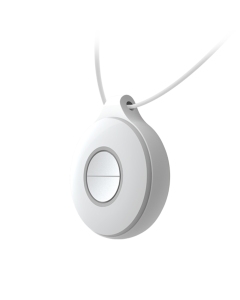 Hikvision AX PRO DS-PDEBP2-EG2-WE Portable Panic ButtonSpecial Price £12.00 £10.00 Regular Price £44.88 £37.40
 -
 Wristband for Hikvision AX PRO Portable Emergency ButtonSpecial Price £2.40 £2.00 Regular Price £5.60 £4.67


